
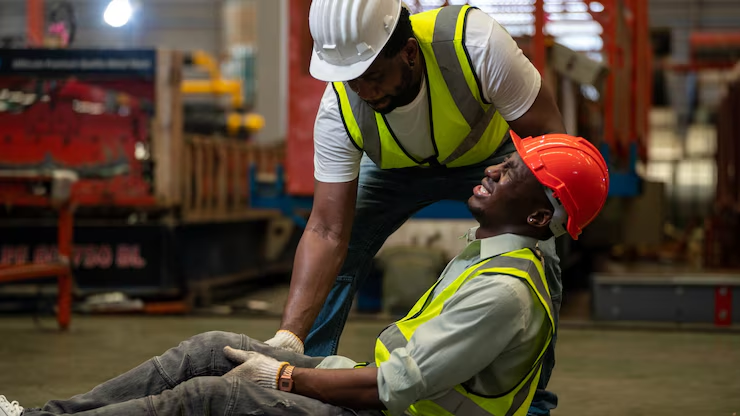
Construction Site Accidents: Who Bears the Legal Liability?
Introduction: The Perilous Landscape of Construction
The rhythmic hum of machinery, the ambitious reach of cranes towards the sky, and the tangible progress of new structures rising from the ground – these are the hallmarks of the construction industry. It’s an industry that builds dreams, shapes skylines, and underpins economies. Yet, beneath this veneer of progress lies a harsh reality: construction sites are inherently dangerous workplaces. Every day, across the globe, men and women in hard hats face myriad hazards, and tragically, accidents are an all too common occurrence. These incidents, ranging from minor injuries to catastrophic fatalities, don’t just impact the immediate victim; they send ripples of devastation through families, communities, and the very fabric of the companies involved.
But when the dust settles, the sirens fade, and the immediate crisis passes, a critical question inevitably arises: Who bears the legal liability? This seemingly straightforward question unravels into a complex web of laws, contracts, duties, and responsibilities. It’s a question that can determine who pays for medical bills, lost wages, and long-term care; who faces fines and legal penalties; and ultimately, who is held accountable for preventable harm.
This blog post will delve deep into the intricate landscape of legal liability in construction site accidents. We will explore the common causes of these incidents, identify the diverse cast of potential defendants, unravel the nuances of legal doctrines like negligence and strict liability, and distinguish between workers’ compensation and third-party claims. Our aim is to provide a comprehensive, understandable, and insightful guide for anyone seeking to navigate this challenging terrain – from construction professionals and site managers to workers and their families, and even curious onlookers. Understanding these legal frameworks is not just about assigning blame; it’s about fostering a culture of safety, ensuring justice, and ultimately, striving for a future where every construction worker returns home safely.
Interactive Element: Have you ever worked on or visited a construction site? What was your impression of its safety measures, or what dangers did you perceive? Share your initial thoughts in the comments below!
Section 1: Understanding Construction Site Accidents – A Multifaceted Problem
Construction accidents are not monolithic; they arise from a confluence of factors and manifest in various forms, leading to a spectrum of injuries. A holistic understanding of these incidents is crucial before we can assign legal responsibility.
1.1 Common Causes: The “Fatal Four” and Beyond
The Occupational Safety and Health Administration (OSHA) in the United States often highlights the “Fatal Four” – four categories of accidents that account for a significant percentage of construction fatalities. While specific statistics vary by region and year, these consistently remain leading causes:
- Falls (from heights): This is consistently the leading cause of fatalities. Falls can occur from scaffolding, ladders, roofs, open excavations, unprotected edges, or through fragile surfaces. Common contributing factors include inadequate fall protection, improper use of safety equipment, unstable working surfaces, and lack of guardrails.
- Struck-by Accidents: These involve workers being hit by moving objects. This can include falling materials (tools, debris), swinging or falling loads from cranes, vehicles (forklifts, dump trucks), or heavy machinery. Poor communication, lack of proper signage, inadequate barricades, and untrained equipment operators are frequent culprits.
- Electrocutions: The presence of live wires, overhead power lines, faulty electrical equipment, and improper lockout/tagout procedures make electrocution a significant hazard. Even low voltage can cause severe burns, nerve damage, and cardiac arrest.
- Caught-in/Between Accidents: These occur when a worker is crushed or compressed between two objects, caught in moving machinery, or trapped in collapsing structures or trenches. Examples include being caught between heavy equipment and a wall, trapped in a trench collapse, or caught in unguarded machinery.
Beyond the “Fatal Four,” numerous other factors contribute to construction site accidents:
- Trench and Excavation Collapses: Unshored or improperly shored trenches can collapse without warning, burying workers.
- Equipment Malfunction: Faulty equipment, lack of maintenance, or improper operation of machinery (cranes, excavators, forklifts) can lead to serious incidents.
- Lack of Proper Training and Supervision: Inexperienced workers, insufficient safety training, or inadequate supervision by foremen and site managers can result in dangerous practices.
- Poor Housekeeping: Cluttered work areas, scattered debris, and unaddressed spills create tripping hazards.
- Exposure to Hazardous Materials: Chemicals, asbestos, lead, and other toxic substances can cause long-term health issues or immediate harm if not handled correctly.
- Fires and Explosions: The presence of flammable materials, welding activities, and gas lines creates a risk of fires and explosions.
- Repetitive Motion Injuries/Overexertion: While not typically “accidents” in the sudden sense, ergonomic hazards leading to musculoskeletal disorders are a significant long-term health and safety concern in construction.
1.2 Types of Injuries: The Human Cost
The injuries sustained on construction sites can be devastating and life-altering. They range from superficial wounds to permanent disabilities and fatalities:
- Traumatic Brain Injuries (TBIs): Caused by falls, struck-by incidents, or impacts, TBIs can result in cognitive impairments, memory loss, personality changes, and long-term neurological problems.
- Spinal Cord Injuries: Falls and crushing accidents can lead to paralysis, loss of sensation, and chronic pain, often requiring lifelong medical care.
- Fractures and Amputations: Broken bones, especially in limbs, are common. In severe cases, limbs may be crushed or severed, leading to amputations.
- Burns: Electrocutions, chemical spills, and fires can cause severe burns, requiring extensive treatment, skin grafts, and potentially leading to disfigurement.
- Internal Injuries: Falls from heights or impacts can cause internal bleeding, organ damage, and other unseen but critical injuries.
- Fatalities: The most tragic outcome, leading to immense emotional and financial devastation for the victim’s family.
- Respiratory Illnesses: Long-term exposure to dust, fumes, and hazardous chemicals can lead to chronic respiratory conditions like silicosis, asbestosis, or occupational asthma.
- Hearing Loss: Prolonged exposure to loud machinery and construction noise can cause permanent hearing damage.
Beyond the immediate physical injuries, construction accidents inflict a significant psychological and financial toll. Victims may suffer from post-traumatic stress disorder (PTSD), anxiety, depression, and face insurmountable medical bills, lost income, and a diminished quality of life. Families often bear the burden of caregiving, emotional distress, and financial hardship.
Interactive Element: Which of these accident types do you believe is the most preventable, and why? What simple measure do you think could make the biggest difference in preventing that type of accident?
Section 2: The Legal Framework – Navigating the Labyrinth of Liability
Understanding who is legally liable for a construction accident requires navigating a complex legal framework. Different legal doctrines come into play, depending on the specific circumstances of the accident, the relationships between the parties involved, and the jurisdiction where the accident occurs.
2.1 Overview of Legal Systems (Briefly)
While a deep dive into comparative law is beyond our scope, it’s worth noting that legal systems generally fall into two broad categories:
- Common Law Systems: Prevalent in countries like the United States, Canada, the UK, and Nigeria, these systems rely heavily on judicial precedent (case law) alongside statutes. Liability often hinges on proving negligence.
- Civil Law Systems: Common in many European and other countries, these systems are primarily based on codified statutes and comprehensive legal codes.
Regardless of the system, certain fundamental legal concepts underpin liability for accidents.
2.2 Key Legal Concepts: The Building Blocks of a Claim
To establish legal liability, particularly in common law jurisdictions, several key concepts are crucial:
2.2.1 Negligence
Negligence is the most common legal theory used to hold parties responsible for construction accidents. It involves a failure to exercise the degree of care that a reasonably prudent person would have exercised in similar circumstances, resulting in harm to another. To prove negligence, four elements must typically be established:
- Duty of Care: The defendant owed a legal duty to the injured party. In construction, this is broad. General contractors owe a duty to all workers on site, property owners to maintain a safe premises, and equipment manufacturers to produce safe products.
- Construction Example: A site supervisor (representing the general contractor) has a duty of care to ensure all workers are wearing appropriate fall protection when working at heights.
- Breach of Duty: The defendant failed to meet that duty of care. This is typically established by demonstrating that the defendant acted (or failed to act) in a way that a reasonable person or entity in their position would not have.
- Construction Example: The site supervisor fails to provide harnesses, or provides defective ones, or fails to enforce their use.
- Causation: The defendant’s breach of duty was a direct and proximate cause of the injured party’s harm. This means there’s a direct link between the negligent act and the injury, and the injury was a foreseeable outcome of the breach.
- Construction Example: Because the worker wasn’t wearing a harness (due to the supervisor’s breach), they fell and suffered a spinal injury. The fall was a direct result of the lack of fall protection, and a spinal injury from such a fall is a foreseeable outcome.
- Damages: The injured party suffered actual damages (injuries, financial losses). Without demonstrable harm, there’s no claim.
- Construction Example: The worker incurred medical bills, lost wages, and experienced pain and suffering due to the spinal injury.
2.2.2 Strict Liability
Strict liability is a legal concept where a party can be held liable for damages even if they were not negligent and did not intend to cause harm. It applies in specific, limited circumstances, often involving “abnormally dangerous activities” or defective products.
- Construction Application: While rare for the act of construction itself, strict liability is highly relevant in product liability claims. If a piece of construction equipment (e.g., a crane, a power tool, scaffolding) has a design defect or manufacturing defect, or lacks adequate warnings, and that defect causes an injury, the manufacturer, distributor, or even retailer of that product can be held strictly liable, regardless of whether they were negligent in its production. The focus is on the product being unreasonably dangerous.
2.2.3 Vicarious Liability (Respondeat Superior)
“Respondeat superior” is Latin for “let the master answer.” This doctrine holds an employer (e.g., a general contractor or subcontractor) responsible for the negligent acts of their employees, provided those acts occurred within the scope of their employment.
- Construction Example: If an excavator operator (an employee of the general contractor) negligently swings the boom, striking and injuring another worker on site, the general contractor can be held vicariously liable for the operator’s negligence, even if the general contractor took all reasonable steps to train and supervise the operator.
2.2.4 Breach of Contract
Construction projects are governed by a complex web of contracts between owners, general contractors, subcontractors, suppliers, and other parties. These contracts often specify duties and responsibilities, including safety protocols. A failure to uphold these contractual obligations can constitute a breach of contract, leading to liability for damages.
- Construction Example: A subcontractor’s contract might stipulate that they are responsible for providing all necessary fall protection for their crew. If they fail to do so, and one of their employees is injured in a fall, they have not only been negligent but also potentially breached their contract with the general contractor or owner.
2.2.5 Statutory Violations (e.g., OSHA)
Governmental bodies, such as the Occupational Safety and Health Administration (OSHA) in the US (or similar regulatory bodies like Factories Act in Nigeria), establish specific safety standards and regulations for workplaces, including construction sites. Violation of these statutes can often be used to establish negligence per se. This means that if a party violates a safety regulation and that violation directly leads to an injury that the regulation was designed to prevent, then negligence is presumed, and the injured party only needs to prove causation and damages.
- Construction Example: OSHA requires guardrails on scaffolding at a certain height. If a general contractor fails to install these guardrails, violating the OSHA standard, and a worker falls from that scaffolding, the general contractor may be found negligent per se.
Interactive Element: If a building collapses due to a structural flaw, but the company that constructed it followed the architect’s flawed blueprints exactly, who do you think should be held most responsible and why? (Think about negligence, strict liability, and breach of contract here!)
Section 3: Who are the Potential Defendants? Identifying the Liable Parties
One of the complexities of construction accident litigation is that multiple parties often share responsibility. Identifying all potential defendants is crucial for an injured party to seek full compensation.
3.1 The General Contractor (GC)
The General Contractor typically holds the primary responsibility for overall site safety and coordination. Their potential liabilities are extensive:
- Overall Site Safety: The GC is usually responsible for maintaining a safe work environment for all workers on site, regardless of their direct employer. This non-delegable duty means they cannot simply pass off all safety responsibility to subcontractors.
- Coordination of Subcontractors: GCs are responsible for ensuring subcontractors adhere to safety standards and for identifying and correcting hazards created by subcontractors.
- Ensuring Compliance: They must ensure compliance with all applicable safety regulations (e.g., OSHA, local building codes).
- Supervision: Liability for their own employees’ negligence under vicarious liability.
- Hiring Practices: Negligent hiring of incompetent or unsafe subcontractors.
- Providing Safety Equipment: Failure to provide necessary safety equipment (e.g., general site fall protection, first aid supplies).
3.2 Subcontractors
Each subcontractor is responsible for the safety of their own employees and for the safety of others affected by their specific work.
- Responsibility for Own Employees: A subcontractor is directly liable for injuries to their own employees if caused by their negligence (e.g., failing to provide proper PPE, inadequate training, unsafe work practices).
- Liability to Third Parties: A subcontractor can be liable if their negligence causes injury to another party on site, including employees of the general contractor or other subcontractors. For example, if a plumbing subcontractor leaves a trench unshored, leading to a collapse that injures an electrician.
- Breach of Contract: As discussed, if their contract specifies safety duties they failed to meet.
3.3 Property Owners (Site Owners)
The owner of the property where construction is taking place also has a duty of care, though its extent can vary.
- Duty to Provide a Safe Premises: Owners have a general duty to ensure the property is reasonably safe for those invited onto it.
- Retention of Control: If the owner retains significant control over the means and methods of construction, or actively interferes with safety measures, their liability increases.
- Awareness of Hazards: If the owner is aware of a dangerous condition on their property (e.g., faulty existing structures, hidden utilities) and fails to address it or warn workers, they can be held liable.
- Hiring Incompetent Contractors: In some cases, if an owner knowingly hires a notoriously unsafe or unqualified general contractor, they could face liability.
3.4 Manufacturers and Suppliers of Equipment and Materials
These entities can be held liable under product liability law.
- Defective Products: If an injury is caused by a defective piece of equipment (crane, scaffolding, power tool) or material (faulty steel beam, flammable insulation), the manufacturer or supplier can be held strictly liable.
- Types of Defects:
- Design Defects: The product was inherently unsafe due to its design, even if manufactured perfectly.
- Manufacturing Defects: A flaw occurred during the manufacturing process, making a specific unit dangerous.
- Failure to Warn: The product lacked adequate warnings about non-obvious dangers or instructions for safe use.
3.5 Architects and Engineers
Their liability typically arises from design flaws or inadequate supervision.
- Design Defects: If a structural design flaw by an architect or engineer leads to a collapse or other accident, they can be held liable for professional negligence.
- Failure to Supervise/Inspect (if part of contract): If their contract includes a duty to oversee construction and ensure adherence to plans, and they fail in this duty, they could be liable. However, general supervision often doesn’t equate to day-to-day site safety responsibility.
3.6 Equipment Lessors
Companies that lease construction equipment have a duty to ensure the equipment is safe, properly maintained, and fit for its intended use. If a leased piece of equipment malfunctions due to poor maintenance or a hidden defect, the lessor could be held liable.
3.7 Other Third Parties
- Utility Companies: If unmarked or improperly marked utility lines (electrical, gas) lead to an accident, the utility company could be liable.
- Inspectors: Independent inspectors, if negligent in their duties, could be held responsible for overlooked hazards.
Interactive Element: Imagine a general contractor hires a subcontractor known for cutting corners on safety. An accident occurs involving the subcontractor’s employee. How might the general contractor’s prior knowledge of the subcontractor’s safety record affect their liability?
Section 4: Workers’ Compensation vs. Third-Party Claims – The Dual Path to Recovery
For an injured construction worker, understanding the avenues for compensation is paramount. There are generally two distinct paths: workers’ compensation and third-party personal injury claims. While seemingly separate, they can often run concurrently and complement each other.
4.1 Workers’ Compensation: The No-Fault Safety Net
Workers’ compensation is an insurance system designed to provide benefits to employees who are injured or become ill as a direct result of their job, regardless of fault. It’s a “no-fault” system, meaning the injured worker doesn’t need to prove that their employer was negligent to receive benefits.
-
Key Features:
- No-Fault: The primary characteristic. If the injury occurred in the course and scope of employment, benefits are generally available.
- Exclusive Remedy Rule: In most jurisdictions, workers’ compensation is the “exclusive remedy” against the employer. This means that an injured employee generally cannot sue their employer directly for negligence if they are receiving (or eligible for) workers’ compensation benefits. This protects employers from costly lawsuits but limits the types of damages an employee can recover from them.
- Benefits Provided:
- Medical Expenses: Covers all reasonable and necessary medical treatment for the work-related injury or illness, including doctor’s visits, hospital stays, surgeries, medications, and rehabilitation.
- Lost Wages (Temporary Disability): Provides a portion of lost wages (e.g., two-thirds of the average weekly wage) while the worker is temporarily unable to work.
- Permanent Disability Benefits: If the injury results in a permanent impairment, benefits are provided based on the severity of the disability.
- Vocational Rehabilitation: May cover costs for retraining if the worker can no longer perform their previous job.
- Death Benefits: In cases of fatal accidents, benefits are paid to eligible dependents (e.g., spouse, children) to cover funeral costs and a portion of the deceased worker’s lost earnings.
-
Exceptions to the Exclusive Remedy Rule: While strict, there are limited exceptions where an employee might be able to sue their employer:
- Intentional Torts: If the employer intentionally caused the injury (e.g., deliberately removed a safety guard to speed up production, knowing it would cause harm). This is extremely difficult to prove.
- Employer Non-Compliance: If the employer failed to carry workers’ compensation insurance as required by law.
- Dual Capacity Doctrine (Rare): If the employer acted in another capacity that created a duty to the employee (e.g., a defective product manufactured by the employer and then used by the employee).
4.2 Third-Party Claims: Seeking Full Compensation
The “exclusive remedy” rule against the employer does not typically prevent an injured worker from pursuing a personal injury claim against a negligent “third party” – any entity other than their direct employer or a co-employee (who also benefits from workers’ comp immunity). This is a critical avenue for injured construction workers.
-
Why It’s Crucial: Third-party claims allow injured workers to seek “full compensation,” which typically includes damages not covered by workers’ compensation:
- Pain and Suffering: Compensation for physical pain, emotional distress, mental anguish, and loss of enjoyment of life.
- Loss of Consortium: Damages sought by the spouse of the injured worker for the loss of companionship, affection, and services.
- Full Lost Wages: Workers’ compensation usually only pays a percentage of lost wages; a third-party claim can seek 100% of past and future lost earnings.
- Future Medical Expenses: Beyond what workers’ comp may cover, especially for lifelong care.
- Punitive Damages (Rare): In cases of egregious negligence or intentional misconduct, these are designed to punish the defendant and deter similar behavior.
-
Common Third-Party Defendants: As identified in Section 3, these can include:
- General contractors (if the injured worker is a subcontractor’s employee)
- Other subcontractors
- Property owners
- Manufacturers of defective equipment
- Architects or engineers with design flaws
- Equipment lessors
-
Subrogation: An important concept in third-party claims is “subrogation.” If an injured worker receives workers’ compensation benefits, the workers’ compensation insurance carrier usually has a right to be reimbursed from any settlement or judgment the worker obtains from a third-party claim. This prevents the worker from “double dipping” (recovering twice for the same losses). The workers’ comp lien must typically be satisfied before the injured worker receives their portion of the third-party recovery.
Interactive Element: If you were injured on a construction site, and both your employer and a separate equipment manufacturer were potentially at fault, would you prioritize a quick workers’ compensation settlement or pursue a potentially longer third-party claim for fuller compensation? What factors would influence your decision?
Section 5: The Role of Evidence and Investigation in Proving Liability
Regardless of the legal theory, proving liability for a construction accident hinges on a meticulous and thorough investigation, supported by compelling evidence. The aftermath of an accident is often chaotic, but critical steps taken immediately can make or break a legal claim.
5.1 Immediate Steps After an Accident (for the Injured Party/Witnesses):
- Seek Medical Attention: The absolute priority. Documenting injuries by medical professionals is crucial for both treatment and legal purposes.
- Report the Accident: Immediately report the incident to your supervisor, the general contractor, and/or the property owner. Ensure an official accident report is filed. Keep a copy.
- Document Everything (Safely):
- Photos and Videos: Use a smartphone to capture the accident scene from multiple angles. Include wide shots of the area, close-ups of specific hazards (e.g., exposed wiring, faulty scaffolding, spilled materials), the equipment involved, and visible injuries. Note time and date stamps.
- Witness Information: Get names and contact details of anyone who saw the accident or the conditions leading up to it. Briefly note what they saw.
- Personal Account: As soon as possible, write down everything you remember about the accident – time, date, location, weather, what you were doing, how it happened, who was present, and what was said. This helps preserve details before memory fades.
- Preserve Evidence: Do not move or alter anything at the accident scene unless absolutely necessary for safety or emergency medical care.
5.2 Key Evidence in Proving Liability:
- Accident Reports:
- Internal Company Reports: Generated by the employer, general contractor, or site safety manager.
- OSHA/Regulatory Reports: Investigations by governmental safety agencies often include findings of violations, which can be powerful evidence of negligence per se.
- Witness Statements: Written or recorded statements from individuals who saw the accident or the conditions that caused it. Eyewitness testimony is often critical.
- Medical Records and Bills: Detailed documentation from doctors, hospitals, therapists, and pharmacies linking the injuries directly to the accident and outlining the extent of treatment and costs.
- Safety Logs and Records:
- Safety Meeting Minutes: Did safety topics relevant to the accident get discussed?
- Inspection Logs: Were regular safety inspections conducted? Were hazards identified and addressed?
- Hazard Assessments: Were potential hazards identified for the specific tasks being performed?
- Safety Manuals and Procedures: Did the company have written safety policies? Were they followed?
- Equipment Maintenance Records: For any machinery or tools involved, maintenance logs can reveal if equipment was poorly maintained or known to be faulty.
- Training Records: Documentation showing whether workers (including the injured worker and equipment operators) received adequate safety training for their tasks.
- Photographs and Videos: As mentioned, visual evidence of the scene, hazards, equipment, and injuries. Surveillance footage, if available, can be invaluable.
- Contracts and Subcontracts: These documents define the duties and responsibilities of various parties on the site, establishing who was responsible for what.
- Expert Witness Testimony: Crucial in complex cases to explain technical aspects, establish causation, and define the standard of care:
- Safety Experts: Can testify whether safety protocols were followed, whether a safe work environment was provided, and whether specific regulations were violated.
- Engineers: Can analyze structural failures, equipment defects, or design flaws.
- Medical Professionals: Can explain the nature and extent of injuries, prognosis, and future medical needs.
- Accident Reconstructionists: Can recreate the sequence of events leading to the accident.
- Vocational Experts and Economists: Can assess lost earning capacity and future financial damages.
5.3 The Importance of a Thorough Investigation:
A thorough investigation aims to uncover the root cause of the accident, rather than just the immediate trigger. This involves:
- Identifying Direct and Underlying Causes: Was it just a fall, or did the fall occur because scaffolding was improperly erected, due to lack of training, or because supervision was absent?
- Identifying All Responsible Parties: A comprehensive investigation can reveal multiple layers of negligence or defect, leading to a multi-party claim.
- Gathering Timely Evidence: Evidence can disappear or be altered quickly. A prompt investigation preserves critical information.
Interactive Element: Beyond taking photos and getting witness contacts, what other pieces of evidence do you think would be most critical in establishing liability after a construction accident involving a fall from scaffolding? Why?
Section 6: Defenses to Liability – What Accused Parties Might Argue
When an injured party brings a claim, the defendants will inevitably raise defenses to mitigate or avoid liability. Understanding these common defenses is important for both sides of a legal dispute.
6.1 Comparative Negligence / Contributory Negligence
These doctrines deal with situations where the injured party themselves contributed to their own injuries. The specific application varies by jurisdiction:
-
Contributory Negligence (Minority Rule): In a few jurisdictions, if the injured party is found to be even 1% at fault for their own injuries, they are completely barred from recovering any damages from the other negligent parties. This is a very harsh rule.
-
Comparative Negligence (Majority Rule): Most jurisdictions follow some form of comparative negligence. This means that an injured party’s damages are reduced by their percentage of fault. There are two main types:
- Pure Comparative Negligence: The injured party can recover damages no matter how high their percentage of fault. If they are 90% at fault, they can still recover 10% of their damages.
- Modified Comparative Negligence: The injured party can only recover damages if their percentage of fault is below a certain threshold (typically 50% or 51%). If they are at or above that threshold, they recover nothing.
-
Construction Example: A worker is injured in a trench collapse. The contractor was negligent for not properly shoring the trench. However, the worker had been warned not to enter the trench without a spotter, and they entered alone. A jury might find the contractor 70% at fault and the worker 30% at fault. Under pure comparative negligence, the worker’s damages would be reduced by 30%. Under a 50% modified comparative negligence rule, the worker would still recover, but if they were found 51% or more at fault, they would get nothing.
6.2 Assumption of Risk
This defense argues that the injured party knowingly and voluntarily accepted a dangerous risk inherent in the activity. For this defense to succeed, the defendant must typically show:
- The plaintiff had actual knowledge of the risk.
- The plaintiff understood the scope and nature of the risk.
- The plaintiff voluntarily encountered the risk.
- Construction Application: While construction work is inherently risky, this defense is difficult to apply successfully against an injured worker because employers have a fundamental duty to provide a safe workplace. Simply working in a dangerous environment does not automatically imply assumption of risk if the danger was exacerbated by negligence. It’s more likely to succeed if a worker explicitly disregarded a safety instruction or engaged in an unauthorized and dangerous activity. For instance, if a worker was expressly told not to operate a specific piece of machinery without certification, and they did so anyway and were injured.
6.3 Lack of Causation
A defendant may argue that their actions (or inactions) were not the direct or proximate cause of the injured party’s harm. They might claim that another factor, an unforeseeable event, or the injured party’s own actions were the true cause.
- Construction Example: A subcontractor is accused of leaving debris on a walkway. A worker trips and falls. The subcontractor might argue that the worker was distracted by their phone and would have tripped anyway, or that the lighting was poor due to an issue with the general contractor’s temporary lighting, thereby breaking the chain of causation between the debris and the fall.
6.4 Compliance with Regulations / Industry Standards
A defendant might argue that they followed all applicable safety regulations (e.g., OSHA standards) and industry best practices, therefore demonstrating that they exercised reasonable care.
- Counter-Argument: While compliance is important, it is not always a complete defense. Sometimes, even strict adherence to minimum regulatory standards may not be enough to satisfy the common law duty of reasonable care, especially if a known, greater hazard existed.
6.5 Independent Contractor Defense
When a general contractor is sued for the negligence of a subcontractor’s employee, they might argue that the subcontractor was an “independent contractor” and therefore the general contractor is not vicariously liable for their actions.
- Nuance: This defense is often challenged. While a general contractor isn’t usually liable for the collateral negligence of an independent contractor, they are often responsible for ensuring the overall safety of the site, which can include ensuring the independent contractor works safely. Also, for inherently dangerous work, the general contractor may have a non-delegable duty. The degree of control the general contractor exercised over the subcontractor’s work is key here.
Interactive Element: If a construction worker disregards a clear and repeated safety warning from their supervisor and then gets injured, how might the concept of “comparative negligence” be applied? Do you think it’s fair that their compensation might be reduced? Why or why not?
Section 7: The Importance of Proactive Safety Measures and Risk Management
While understanding legal liability is crucial for recourse after an accident, the ultimate goal should always be prevention. Proactive safety measures and robust risk management strategies are the most effective ways to reduce accidents, protect lives, and mitigate potential legal and financial fallout.
7.1 Employer Responsibilities: Beyond Compliance
Employers (general contractors and subcontractors alike) have a moral and legal imperative to prioritize safety. This goes beyond simply checking boxes for regulatory compliance:
- Providing a Safe Work Environment: This is the foundational duty. It means identifying and eliminating hazards, providing necessary safety equipment, and implementing effective safety protocols.
- Comprehensive Safety Training: Workers must be thoroughly trained on potential hazards, safe work procedures, proper use of equipment, and emergency protocols. Training should be ongoing, in a language workers understand, and adapted to specific tasks.
- Regular Safety Inspections and Audits: Frequent and documented inspections help identify hazards before they cause accidents. Audits assess the effectiveness of the overall safety program.
- Proper Equipment Maintenance: All tools, machinery, and vehicles must be regularly inspected, maintained, and repaired to prevent malfunctions.
- Implementing and Enforcing Safety Protocols: Safety rules must be clear, communicated effectively, and consistently enforced. Consequences for non-compliance are necessary.
- Hazard Communication: Workers must be informed about hazardous materials on site and provided with Safety Data Sheets (SDS) and appropriate personal protective equipment (PPE).
- Investigating Near Misses: “Near misses” (incidents that could have resulted in injury or damage) are invaluable learning opportunities. Thorough investigation of near misses can prevent actual accidents.
7.2 Employee Responsibilities: A Shared Commitment
Safety is a two-way street. While employers bear the primary responsibility, employees also have crucial roles:
- Following Safety Procedures: Adhering to all company safety rules and regulatory requirements.
- Using Provided PPE: Consistently wearing and properly using all required personal protective equipment (hard hats, safety glasses, gloves, fall harnesses, etc.).
- Reporting Hazards: Promptly reporting any unsafe conditions, faulty equipment, or unsafe work practices to supervisors or safety personnel.
- Participating in Training: Actively engaging in all safety training sessions.
7.3 The Role of Safety Culture:
Beyond specific rules and procedures, a strong safety culture is paramount. This means:
- Leadership Commitment: Safety starts at the top. Management must visibly and genuinely commit to safety, allocating resources, and holding themselves accountable.
- Employee Engagement: Empowering employees to identify hazards, speak up about concerns without fear of retaliation, and participate in safety committees.
- Continuous Improvement: Treating safety as an ongoing process of learning, adaptation, and improvement based on new information, incidents, and industry best practices.
- Proactive vs. Reactive: Shifting from a reactive approach (responding to accidents) to a proactive one (preventing them).
7.4 Insurance: A Financial Safety Net (But Not a Substitute for Safety)
Various types of insurance play a vital role in managing the financial risks associated with construction accidents:
- Workers’ Compensation Insurance: Mandatory in most places, it covers employee injuries regardless of fault, as discussed.
- Commercial General Liability (CGL) Insurance: Protects general contractors and subcontractors against claims of bodily injury or property damage caused to third parties (non-employees) due to their operations. This is crucial for third-party claims.
- Professional Liability (Errors & Omissions) Insurance: Covers architects and engineers for claims arising from their professional negligence (e.g., design flaws).
- Builder’s Risk Insurance: Covers property damage to the construction project itself during construction.
While insurance provides a critical financial safety net, it’s not a substitute for robust safety practices. Accidents still result in increased premiums, reputational damage, project delays, and the immeasurable human cost.
Interactive Element: What do you believe is the single most effective proactive measure a construction company can take to prevent accidents and mitigate potential legal liability? Explain your reasoning.
Conclusion: Towards a Safer Future and Just Accountability
The construction industry, a cornerstone of development and progress, regrettably remains fraught with inherent risks. Construction site accidents are not mere statistics; they represent lives irrevocably altered, families plunged into crisis, and significant financial burdens on individuals and businesses alike. As we have explored, the question of “who bears the legal liability?” is rarely simple, often involving a complex interplay of legal doctrines, contractual obligations, and the actions (or inactions) of multiple parties.
From the overarching responsibility of the general contractor to the specific duties of subcontractors, property owners, equipment manufacturers, and design professionals, the legal framework is designed to ensure accountability. Whether through the no-fault system of workers’ compensation or the more expansive pursuit of third-party negligence claims, avenues exist for injured workers to seek justice and compensation. The diligent collection of evidence, thorough investigation, and the expertise of legal professionals are critical in navigating these challenging processes.
Ultimately, however, the ideal scenario is one where these legal battles are far less frequent. The emphasis must always shift from response to prevention. By fostering a robust safety culture – one built on unwavering leadership commitment, comprehensive training, continuous hazard identification, and active employee participation – construction companies can dramatically reduce the incidence of accidents. Investing in proactive safety measures is not merely a regulatory compliance exercise; it is an economic imperative and, more importantly, a moral obligation. The costs of prevention, in terms of time and resources, are consistently dwarfed by the staggering direct and indirect costs of accidents – not to mention the invaluable human cost.
As technology advances and safety knowledge grows, the construction industry has an ever-increasing capacity to make its workplaces safer. By embracing this challenge and holding all parties accountable for their roles, we can collectively work towards a future where construction continues to build our world, but does so with far fewer casualties and far more certainty that every worker returns home safely at the end of their shift.
Interactive Element: What’s one key takeaway from this post that you think everyone involved in the construction industry – from the CEO to the newest apprentice – should know and act upon? Share your thoughts and let’s continue the conversation for a safer tomorrow.
