
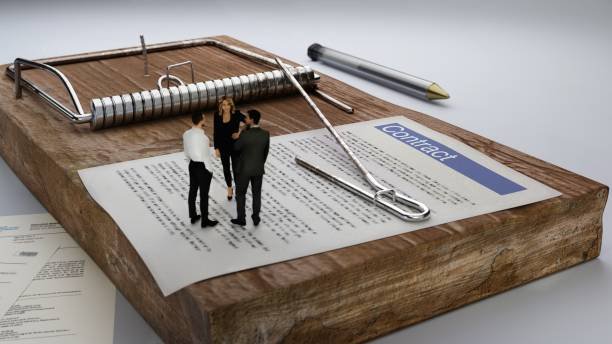
The Unspoken Contract: Navigating the Legal Labyrinth of Verbal Construction Agreements
“Picture this: You’re a seasoned contractor, shaking hands with a client on a renovation project. You’ve worked with them before, trust is high, and the project seems straightforward. ‘Just get it done,’ they say, ‘and we’ll sort out the details as we go.’ It’s a common scene in the fast-paced world of construction, where relationships and efficiency often lead to verbal agreements. But what happens when that seemingly simple handshake turns into a tangled web of misunderstandings, disputes, and potentially costly legal battles? What are the true legal implications when your carefully planned project rests on spoken words rather than meticulously drafted contracts?”
Introduction: The Allure and Peril of Verbal Agreements in Construction
The construction industry, with its dynamic timelines and often immediate needs, has long fostered a culture where verbal agreements sometimes take precedence over formal written contracts. This can stem from a desire for speed, established trust between parties, the perceived simplicity of smaller projects, or a belief that a handshake is as binding as any document.
However, beneath this veneer of efficiency lies a complex legal landscape fraught with inherent risks. While the law in many jurisdictions acknowledges the enforceability of verbal contracts, the practicalities of proving their existence and terms in a construction context are often challenging, ambiguous, and ultimately, expensive. This blog post will delve deep into the legal implications of verbal construction agreements, exploring their validity, the immense challenges of proof, common areas of dispute, and the legal doctrines that might offer recourse. Ultimately, we aim to make a resounding case for why the perceived convenience of a verbal agreement pales in comparison to the security and clarity offered by a written contract.
Part 1: The Legal Foundation – Are Verbal Agreements Even Valid?
The fundamental question at the heart of any verbal agreement is its legal validity. Contrary to popular belief, a verbal contract can be legally binding, provided it meets the essential elements of a contract as recognized under general contract law.
- General Contract Law Principles: For any contract, verbal or written, to be legally enforceable, several core elements must be present:
- Offer: One party must clearly propose specific terms and conditions. In a construction context, this could be a contractor offering to build a garage for a specific price, by a certain date, and to a defined specification. The offer must be clear enough for the other party to understand what they are agreeing to.
- Acceptance: The other party must unequivocally agree to the terms of the offer. This acceptance can be expressed verbally (“Yes, that sounds good, let’s do it”) or implied through conduct (e.g., the client allowing the contractor to start work after the verbal offer). The acceptance must mirror the offer – any significant deviation constitutes a counter-offer, not an acceptance.
- Consideration: This refers to the exchange of something of value between the parties. In construction, this is typically the contractor’s promise to perform work and the client’s promise to pay for that work. Without consideration, an agreement is generally considered a gift or a promise, not a contract.
- Intention to Create Legal Relations: Both parties must intend for their agreement to be legally binding and enforceable in a court of law. In commercial and construction settings, there is a strong presumption that parties intend to create legal relations, distinguishing a casual chat from a contractual commitment.
- Capacity: The parties entering into the agreement must have the legal capacity to do so. This means they must be of sound mind, of legal age, and not under duress or undue influence. For businesses, the individuals representing them must have the authority to bind the company.
- Legality: The purpose of the agreement must be legal. A contract to build something illegal or using illegal means would not be enforceable.
- Statute of Frauds and its Relevance (or Irrelevance) to Construction:
The Statute of Frauds is a legal concept that requires certain types of contracts to be in writing to be enforceable. Its historical purpose was to prevent fraudulent claims based on unreliable verbal testimony. Common examples of contracts typically covered by the Statute of Frauds include:
- Contracts for the sale or transfer of an interest in land.
- Contracts that cannot be performed within one year from the date of their making.
- Contracts for the sale of goods above a certain monetary value (e.g., $500 under the Uniform Commercial Code in the US).
Crucial Point for Construction: While the Statute of Frauds applies to a broad range of agreements, it’s vital to understand its specific application to construction contracts. In many jurisdictions, a general construction contract itself is not automatically required to be in writing under the Statute of Frauds, unless it falls into one of the categories above (e.g., a multi-year project, or a contract that includes the sale of land). This means a verbal construction agreement can be legally valid and enforceable. However, this legal validity is often overshadowed by the immense practical difficulties of proving its terms, as we will explore in the next section.
(Interactive Element: “Are you aware of the specific contract laws in your region? A quick search for ‘[Your State/Country] Statute of Frauds construction contracts’ can provide valuable insights into local requirements!”)
Part 2: The Proving Ground – Evidentiary Challenges of Verbal Agreements
The greatest hurdle for a verbal construction agreement isn’t its inherent validity, but the monumental task of proving its existence and specific terms when a dispute arises. Without a written document, the legal battle often descends into a “he said, she said” scenario, where memories fade, intentions are questioned, and objective evidence is scarce.
- The Burden of Proof: In any legal dispute involving a verbal agreement, the party asserting the existence and terms of that agreement bears the burden of proving it to the court. This is a significant challenge when there’s no tangible record.
- Lack of Written Record – The “He Said, She Said” Dilemma:
This is the core problem. A written contract provides a clear, objective record of what was agreed. A verbal agreement leaves everything open to interpretation, misunderstanding, or outright denial.
- Ambiguity and Vagueness: Verbal discussions are rarely as precise as a written contract. Key elements like the exact scope of work, material specifications, quality standards, payment schedules, completion dates, and responsibility for unforeseen circumstances are often left vague or unsaid, leading to differing interpretations. “Do it right” can mean very different things to a client and a contractor.
- Witness Testimony: Eyewitnesses present during the verbal agreement can testify. However, memories can be unreliable, witnesses can be biased (especially if they are friends or employees of one party), and their credibility can be challenged.
- Course of Dealing: If the parties have a history of working together, previous written or even verbal contracts between them can help establish a pattern of behavior and typical contractual terms.
- Course of Performance: How the parties actually performed the work after the verbal agreement can provide strong circumstantial evidence of what they believed the terms to be. For example, if a contractor consistently submitted weekly invoices for work done and the client consistently paid them, this suggests an agreement on weekly payments.
- Payment Records: Invoices, receipts, bank transfer records, and accounting ledgers can prove that money changed hands and often indicate the purpose of those payments (e.g., “deposit for roof repair,” “payment for phase 1 of extension”).
- Emails, Texts, and Other Digital Communications: While not formal contracts, these contemporaneous digital records can be invaluable. A text message from the client saying “Sounds good for the £5,000 bathroom renovation, start next Monday!” or an email from the contractor summarizing a verbal discussion (“Following our chat, we agreed to complete the tiling for an additional £800”) can serve as powerful corroborating evidence. The more specific these communications are, the better.
- Actions and Conduct: The actions taken by both parties after the verbal agreement can speak volumes. For instance, if a client permits a contractor to order expensive materials and begin demolition, it strongly suggests an agreement was in place.
- Photographic/Video Evidence: Progress photos, videos of site conditions, or even recordings of verbal discussions (where legally permissible and with consent, if required) can provide concrete evidence.
- The Parol Evidence Rule: While primarily relevant to written contracts, understanding the Parol Evidence Rule is crucial for highlighting the superiority of written agreements. This rule generally prevents parties from introducing “extrinsic” evidence (like prior verbal agreements or discussions) to contradict, vary, or add to the terms of a written contract that is intended to be the complete and final agreement between the parties. This rule effectively means that once a comprehensive written contract is signed, earlier verbal understandings (even if they happened) are generally irrelevant in court. This reinforces why relying on verbal agreements is risky.
Types of Evidence that Can Be Used (and their limitations): While challenging, proving a verbal agreement isn’t impossible. Courts will consider various forms of evidence, but each comes with its own set of limitations:
Part 3: Common Pitfalls and Areas of Dispute
The inherent ambiguity of verbal agreements creates fertile ground for disputes in various critical areas of a construction project. These are the flashpoints where “he said, she said” quickly escalates into legal conflict.
- Scope Creep and Changes:
- The Problem: Without a clearly defined written scope of work, it’s incredibly easy for the project to expand incrementally. A client might verbally request small additions or changes, assuming they are included or will be handled informally, while the contractor expects additional payment.
- Dispute: Proving verbal change orders and their associated costs becomes a nightmare. Was that extra coat of paint included? Did moving that wall verbally incur an additional cost or was it part of the original understanding?
- Payment Disputes:
- The Problem: Payment schedules, progress payment milestones, the final payment amount, and even retention percentages are often left vague in verbal agreements.
- Dispute: Contractors may claim they are owed more than the client believes was agreed upon. Clients may dispute the quality of work or demand deductions without clear contractual grounds. Issues like payment for unforeseen conditions or changes in material costs become highly contentious.
- Delay and Extension of Time:
- The Problem: Without clear timelines, critical path schedules, and force majeure clauses in a written contract, determining responsibility for project delays is incredibly difficult.
- Dispute: Who caused the delay? Was it weather, material shortages, client changes, or contractor inefficiency? Without contractual provisions, proving entitlement to extensions of time or compensation for delays becomes a significant legal challenge.
- Quality of Work and Defects:
- The Problem: What constitutes “good quality work” is subjective. A verbal agreement rarely specifies performance standards, material grades, or acceptable tolerances.
- Dispute: Clients may argue the work is substandard, while contractors maintain they met the “agreed” (verbal) standards. Rectification of defects becomes a battleground, with arguments over who is responsible and who bears the cost.
- Termination:
- The Problem: Written contracts typically include clear clauses for termination, outlining conditions, notice periods, and financial implications. Verbal agreements rarely do.
- Dispute: If either party wishes to end the relationship prematurely, without clear termination provisions, it can lead to messy and expensive disputes over work completed, materials purchased, and potential damages for wrongful termination.
- Health and Safety Responsibilities:
- The Problem: Construction is inherently risky. Written contracts meticulously allocate health and safety responsibilities, insurance requirements, and indemnities. Verbal agreements typically omit these critical details.
- Dispute: In the event of an accident or injury on site, the absence of clear contractual terms can lead to protracted litigation over liability and responsibility, potentially exposing both parties to significant financial and legal consequences.
-
- The Problem: Written contracts often specify mechanisms for dispute resolution, such as mediation, arbitration, or specific court jurisdictions. Verbal agreements lack these.
- Dispute: When conflicts arise, parties are left with the most adversarial and expensive option: litigation through the courts, which can drain resources and damage reputations.
Part 4: Specific Legal Doctrines and Remedies
While challenging, parties relying on verbal construction agreements are not entirely without legal recourse. Courts may apply certain equitable doctrines to prevent injustice, even in the absence of a clear written contract.
- Promissory Estoppel:
- Concept: This doctrine prevents a party from going back on a promise if the other party reasonably relied on that promise to their detriment, and it would be unjust to allow the promisor to renege. It’s often used when a formal contract might not exist or is unenforceable.
- Application in Construction: Imagine a scenario where a general contractor verbally promises a subcontractor a specific project, and based on that promise, the subcontractor declines other lucrative work and orders custom materials. If the general contractor then pulls out, the subcontractor might invoke promissory estoppel to recover their losses, arguing they relied to their detriment on the general contractor’s promise.
- Challenges: Proving promissory estoppel requires demonstrating a clear and unambiguous promise, reasonable reliance, and significant detriment, which can still be difficult without written evidence. It’s often a “last resort” remedy.
- Quantum Meruit (“As Much As He Deserves”):
- Concept: This is a Latin legal principle meaning “as much as one has earned” or “as much as it is worth.” It’s a quasi-contractual remedy that allows a party to recover a reasonable sum for work done or services rendered, even in the absence of a formal, express contract, to prevent unjust enrichment.
- Application in Construction: If a contractor performs work for a client under a verbal agreement that is later found to be unenforceable (e.g., due to a fundamental misunderstanding, or if the client simply denies the agreement), the contractor might still be able to claim payment based on quantum meruit for the value of the work they actually performed and the benefit conferred upon the client. This typically focuses on the reasonable market value of the services and materials, not necessarily what was “agreed” verbally.
- When it Applies: This is often invoked when:
- No formal contract exists.
- A contract is unenforceable or terminated before completion.
- Extra work was performed outside the scope of an existing contract without a formal change order.
- Challenges: While it allows for recovery, proving the “reasonable value” of the work can still be contentious, requiring expert testimony on industry standards and costs.
- Unjust Enrichment:
- Concept: This principle dictates that a person should not be allowed to unjustly benefit at the expense of another. If one party provides a benefit to another without legal justification for keeping it, the law may require restitution.
- Application: Similar to quantum meruit, unjust enrichment claims aim to prevent a client from receiving the benefit of a contractor’s work without paying for it. For example, if a builder completes a significant portion of a renovation without a written agreement, and the client benefits from this work but refuses to pay, an unjust enrichment claim could compel payment.
- Concept: If a verbal contract is successfully proven and it’s established that one party breached its terms, the aggrieved party can seek damages. The goal of damages in contract law is generally to put the injured party in the position they would have been in had the contract been performed.
- Types of Damages:
- Direct Losses: Costs directly incurred due to the breach (e.g., cost of hiring another contractor to finish the work, cost of materials wasted).
- Consequential Losses: Indirect losses that were a foreseeable consequence of the breach (e.g., lost profits on another project due to delays caused by the breach).
- Cost of Rectification: The cost to fix defective work.
- Challenges: Calculating and proving these damages can be extremely complex without clear contractual terms outlining pricing, timelines, and quality standards. Courts will require substantial evidence to support any claims for damages.
Part 5: The Prudent Path – Why Written Contracts Are Indispensable
Given the extensive pitfalls and challenges associated with verbal construction agreements, the argument for written contracts becomes overwhelmingly clear. A written contract is not merely a formality; it is a fundamental tool for risk management, clarity, and protection for all parties involved in a construction project.
- Clarity and Certainty:
- A written contract meticulously defines every aspect of the project: the precise scope of work (what is included and excluded), detailed specifications for materials and finishes, exact pricing, clear payment schedules and milestones, realistic timelines, and specific responsibilities of each party. This minimizes misunderstandings and provides a shared understanding from the outset.
- Evidentiary Value:
- In the event of a dispute, a written contract provides irrefutable proof of the agreement’s existence and its exact terms. It serves as the primary evidence in court, significantly simplifying the process of proving a claim and reducing reliance on unreliable verbal testimony.
- Risk Allocation:
- Construction projects are inherently susceptible to unforeseen risks – fluctuating material prices, inclement weather, labor shortages, design changes, or site complications. A well-drafted written contract clearly identifies and allocates these risks, stipulating who is responsible for what in various scenarios (e.g., force majeure clauses, escalation clauses). This prevents blame games and facilitates smoother project execution.
- Dispute Resolution Mechanisms:
- Written contracts can pre-determine the process for resolving disputes. This might include mandatory mediation, binding arbitration, or specifying the jurisdiction for litigation. Having these mechanisms in place can save enormous amounts of time, money, and stress compared to defaulting to court battles.
- Change Management:
- Construction projects rarely proceed exactly as planned. Written contracts establish clear procedures for managing changes and variations to the original scope of work. This includes requirements for written change orders, agreed-upon pricing for additional work, and revised timelines, preventing “scope creep” and unapproved costs.
- Termination Clauses:
- Should the need arise to terminate a contract, a written agreement provides clear conditions, notice periods, and financial implications of such an action. This minimizes disputes and ensures an orderly conclusion to the relationship, even in adverse circumstances.
- Protection for Both Parties:
- A good written contract safeguards the interests of both the client and the contractor. For the client, it ensures the project meets their expectations and budget. For the contractor, it protects their payment, defines their responsibilities, and limits their liability.
- Professionalism and Reputation:
- Operating with written contracts demonstrates professionalism and a commitment to best practices. This builds trust with clients and partners, enhancing a contractor’s reputation in the industry. It signals that you take commitments seriously and are prepared for a formal business relationship.
(Interactive Element: “If you’ve ever dealt with a project that went off the rails, could a clearly defined written contract have prevented or mitigated the issues? Share your thoughts!”)
Part 6: Practical Advice for Navigating Verbal Agreements (When Inevitable)
While the strong recommendation is always to use written contracts, the reality of the construction world sometimes dictates that verbal agreements occur, especially in initial stages or for very minor works. If you find yourself in such a situation, or if you’ve already entered into a verbal agreement, here’s crucial practical advice to mitigate risks:
- Document Everything (even if verbal):
- Follow Up with Summaries: Immediately after any significant verbal discussion or agreement, send a written summary via email or text message to the other party. State clearly: “Following our call/meeting today, we agreed on the following points: [List specific details of scope, price, timeline, responsibilities]. Please let me know if anything in this summary is incorrect within [e.g., 24 hours].” This creates a contemporaneous record and provides an opportunity for correction.
- Keep Detailed Notes: Maintain a meticulous log of all verbal communications, including dates, times, attendees, and key points discussed and agreed upon. These notes, while not a contract themselves, can serve as crucial corroborating evidence.
- Record Work Performed: Keep exhaustive records of all work completed, materials purchased, hours worked by your team, and any sub-contractor activities. This includes daily logs, photographs, videos, and receipts. This will be invaluable for a quantum meruit claim if payment becomes an issue.
- Maintain Payment Records: Ensure all payments, whether incoming or outgoing, are clearly documented. Use invoices, bank transfer descriptions, and receipts that explicitly link payments to specific work or project phases.
- Clarity is Key:
- Even in verbal discussions, strive for utmost specificity. Instead of “Fix the roof,” say “Replace the damaged shingles on the south side of the roof using [specific type] shingles, for £X, to be completed by [date].”
- Confirm Understanding: Don’t assume. Ask the other party to repeat their understanding of the agreement to ensure mutual clarity.
- Witnesses:
- Whenever possible, conduct important verbal discussions with a neutral third party present. Their testimony could be vital if a dispute arises.
- Partial Performance:
- If work begins based on a verbal agreement, ensure your actions and the other party’s actions are consistent with what you believe the agreement to be. Any deviations should prompt immediate written clarification.
- Proactively: Before entering into any significant verbal agreement, especially for projects of substantial value or complexity, consult with a construction lawyer. They can advise on risks and help draft protective documentation.
- Reactively: At the first sign of a dispute arising from a verbal agreement, seek legal advice immediately. An experienced lawyer can help assess your position, gather evidence, and explore potential remedies.
Seek Legal Counsel (Proactive and Reactive):
Conclusion: The Loud Call for Written Certainty
In conclusion, while the legal validity of verbal construction agreements is generally acknowledged, their practical enforceability is a precarious journey through a dense thicket of evidentiary challenges and potential disputes. The allure of speed and simplicity often overshadows the profound risks of ambiguity, “he said, she said” scenarios, and the costly, time-consuming litigation that can inevitably follow.
The construction industry, by its very nature, demands precision, clear allocation of risk, and defined responsibilities. These are qualities that verbal agreements inherently lack. From scope creep and payment disputes to unforeseen delays and quality issues, the absence of a written contract transforms minor disagreements into major legal battles, often damaging professional relationships and financial stability.
Therefore, the prudent path for both contractors and clients is unequivocal: always prioritize a clear, comprehensive written contract. Investing the time and effort at the outset to draft and review a well-articulated agreement is not an expense; it is an indispensable safeguard. It provides a solid foundation of clarity, certainty, and legal protection that no handshake, however well-intentioned, can ever truly replicate.
In construction, where physical foundations are meticulously engineered to last, shouldn’t your contractual agreements be built with the same level of foresight, precision, and unshakeable certainty? Choose the enduring power of ink over the ephemeral nature of words. Your project, your reputation, and your peace of mind will thank you for it.
