
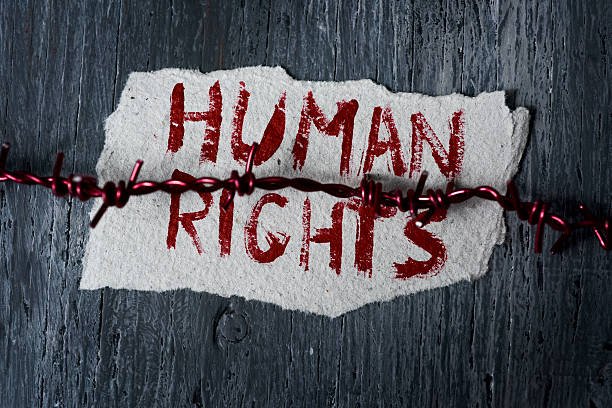
Derogation from Human Rights During National Emergency: A Comprehensive Analysis
Introduction: The Delicate Balance Between State Power and Individual Liberty
National emergencies, whether born of war, internal armed conflict, natural disaster, economic collapse, or widespread public health crises, present a profound challenge to the fabric of a nation. In such extraordinary times, governments often feel compelled to adopt exceptional measures, including those that may impinge upon the human rights and fundamental freedoms of their citizens. The concept of “derogation from human rights” addresses this very tension: the inherent right of a state to protect its existence and maintain public order, juxtaposed with its fundamental obligation to uphold human rights.
This extensive exploration will delve into the complex landscape of derogation, examining its legal foundations, the conditions for its legitimate exercise, the rights that can and cannot be derogated from, historical precedents, and the crucial safeguards necessary to prevent abuse of power. We will also consider the evolving challenges, including the impact of technology, and the role of international oversight in ensuring that emergency powers do not become a pretext for authoritarian rule.
I. Defining National Emergency and Derogation
A. What Constitutes a “National Emergency”?
The threshold for declaring a “national emergency” is critical, as it unlocks extraordinary state powers. International human rights instruments, such as the International Covenant on Civil and Political Rights (ICCPR) and regional conventions like the European Convention on Human Rights (ECHR) and the American Convention on Human Rights, generally define a public emergency as one that “threatens the life of the nation.” This phrase implies a situation of exceptional gravity, actual or imminent, affecting the whole population or a substantial part of it, and posing a threat to the organized life of the community.
Examples of such emergencies include:
- Armed Conflict: Both international and non-international armed conflicts (civil wars, insurgencies) clearly meet this criterion due to their inherent threat to national security and public order.
- Natural Disasters: Catastrophic earthquakes, tsunamis, widespread floods, or prolonged droughts that overwhelm a nation’s capacity to respond through normal channels.
- Epidemics and Pandemics: As demonstrated by the COVID-19 crisis, widespread disease outbreaks can severely threaten public health, economic stability, and social order.
- Severe Economic Crises: While less common for direct derogation, extreme economic collapse leading to widespread civil unrest and breakdown of public services could, in certain circumstances, be deemed to threaten the life of the nation.
- Terrorism and Insurrection: Large-scale, organized attacks or internal uprisings that undermine state authority and endanger civilian lives.
It is crucial that the emergency is not merely a localized disturbance or a minor threat. The severity must be such that it genuinely imperils the nation’s existence or fundamental functions. The declaration of an emergency should not be a pre-emptive measure but a response to an existing or immediately impending crisis.
B. The Concept of Derogation
Derogation refers to the temporary suspension or limitation of certain human rights obligations by a state during a declared public emergency. It is an exceptional measure, distinct from “limitations” which apply to certain rights even in normal times (e.g., freedom of speech can be limited to prevent incitement to violence). Derogation allows states to deviate from their international human rights commitments to the extent strictly necessary to address the emergency.
The underlying principle of derogation is rooted in the recognition that a state must be able to protect itself and its population. However, this power is not absolute. International law imposes strict conditions and safeguards to prevent arbitrary or excessive restrictions on human rights. The very existence of derogation clauses within human rights treaties signifies a pragmatic acknowledgment of exceptional circumstances, while simultaneously aiming to control the potential for abuse.
II. The International Legal Framework for Derogation
The primary international instruments governing derogation are:
- International Covenant on Civil and Political Rights (ICCPR): Article 4 is the cornerstone provision.
- European Convention on Human Rights (ECHR): Article 15 provides similar provisions for member states of the Council of Europe.
- American Convention on Human Rights (ACHR): Article 27 outlines derogation possibilities for states in the Americas.
While the African Charter on Human and Peoples’ Rights (Banjul Charter) does not contain an explicit derogation clause, the African Commission on Human and Peoples’ Rights has consistently held that even in emergency situations, states must uphold their obligations under the Charter, particularly for non-derogable rights. This reflects a more stringent approach to protecting human rights during crises.
A. Conditions for Lawful Derogation (Article 4 ICCPR and similar provisions)
For a derogation to be considered lawful under international human rights law, several stringent conditions must be met:
- Public Emergency Threatening the Life of the Nation: As discussed, this is the fundamental prerequisite. The emergency must be objectively demonstrable and severe enough to threaten the organized life of the community.
- Official Proclamation of a State of Emergency: The state of emergency must be formally declared in accordance with the state’s constitutional and legal procedures. This ensures legality, transparency, and accountability, and provides a clear legal basis for the exceptional measures. It prevents arbitrary invocation of emergency powers.
- Strict Necessity: Measures taken in derogation must be “strictly required by the exigencies of the situation.” This is a test of proportionality and necessity. The measures must be the least intrusive possible to achieve the legitimate aim of addressing the emergency. There must be a direct and demonstrable link between the emergency and the specific rights being derogated from. This condition also implies that the derogation should be limited in duration and geographical scope.
- Non-Discrimination: Derogating measures must not involve discrimination solely on the ground of race, colour, sex, language, religion, or social origin. While some differential treatment might be unavoidable (e.g., targeting specific areas affected by an outbreak), it must be objectively justifiable and not discriminatory in nature.
- Consistency with Other International Law Obligations: Derogating measures must not be inconsistent with other obligations under international law, particularly those derived from international humanitarian law (laws of war). For instance, even during armed conflict, obligations under the Geneva Conventions concerning the protection of civilians and prisoners of war remain fully in force.
- Notification: States exercising the right of derogation must immediately inform other States Parties to the relevant treaty, through the designated intermediary (e.g., the UN Secretary-General for the ICCPR, the Secretary-General of the Council of Europe for the ECHR), of the provisions from which they have derogated and the reasons for such derogation. They must also notify when the derogation is terminated. This notification requirement is crucial for international oversight and accountability.
B. Non-Derogable Rights
Perhaps the most critical safeguard against the abuse of emergency powers is the concept of “non-derogable rights.” These are fundamental human rights that cannot be suspended or limited under any circumstances, even in times of the gravest national emergency. Their absolute nature reflects their inherent importance to human dignity and the bedrock principles of international law.
The ICCPR (Article 4(2)) explicitly lists the following non-derogable rights:
- Right to life (Article 6): While the use of lethal force may be permissible in extremely limited circumstances (e.g., self-defense, lawful acts of war), the arbitrary deprivation of life is always prohibited.
- Prohibition of torture or cruel, inhuman or degrading treatment or punishment (Article 7): This prohibition is absolute and admits no exceptions. Torture can never be justified, even in the fight against terrorism.
- Prohibition of slavery, slave-trade and servitude (Article 8, paragraphs 1 and 2): These forms of exploitation are universally condemned and cannot be reintroduced under any circumstances.
- Prohibition of imprisonment on the basis of inability to fulfill a contractual obligation (Article 11): This protects debtors from arbitrary detention.
- Prohibition of retroactive criminal laws (Article 15): No one can be held guilty of a criminal offence on account of any act or omission which did not constitute a criminal offence under national or international law at the time when it was committed.
- Right to recognition everywhere as a person before the law (Article 16): This ensures legal personality and access to legal protections.
- Freedom of thought, conscience, and religion (Article 18): While the manifestation of religion or beliefs can be subject to limitations (e.g., for public safety), the inner forum of belief is inviolable.
Regional instruments largely align with this list, with some minor variations. For example, the ECHR also lists the right to life (with an exception for lawful acts of war), prohibition of torture, prohibition of slavery, and prohibition of retroactive criminal laws as non-derogable.
The Human Rights Committee, the body responsible for monitoring the implementation of the ICCPR, has further clarified that certain other elements of fair trial rights and humanitarian principles, though not explicitly listed as non-derogable in Article 4, are implicitly so due to their fundamental nature. These include:
- The prohibition of hostage-taking.
- The prohibition of abductions or unacknowledged detention.
- The obligation to treat all persons deprived of their liberty with humanity and respect for the inherent dignity of the human person (Article 10).
- The fundamental requirements of a fair trial, including access to a court and legal counsel.
The distinction between “absolute rights” and “non-derogable rights” is subtle but important. Absolute rights (like the prohibition of torture) can never be restricted, even in normal times. Non-derogable rights, while they cannot be suspended during emergencies, might still have certain inherent limitations even in non-emergency contexts (e.g., the right to life allows for lawful self-defense). However, the critical point is that in an emergency, the strict safeguards associated with these rights must always be maintained.
III. Safeguards Against Abuse of Emergency Powers
The potential for abuse of emergency powers is significant. History is replete with examples of governments using crises as a pretext to consolidate power, suppress dissent, and perpetrate human rights violations. Therefore, robust safeguards are paramount.
A. Legal and Constitutional Safeguards
- Constitutional Provisions: Many national constitutions contain specific provisions governing states of emergency, including:
- Defining the circumstances under which an emergency can be declared.
- Specifying the duration of emergency powers and mechanisms for their extension.
- Listing rights that cannot be suspended.
- Requiring parliamentary approval for declarations and extensions of emergency.
- Mandating parliamentary oversight of measures taken during the emergency.
- Principle of Legality: All emergency measures must have a clear legal basis, either in existing legislation or in specific emergency decrees authorized by law. Arbitrary actions are always prohibited.
- Specificity and Clarity: Emergency decrees and measures should be clear, precise, and publicly accessible, so individuals know what is prohibited or required of them.
- Sunset Clauses and Periodic Review: Emergency powers should be temporary, with definite time limits. “Sunset clauses” automatically terminate the emergency after a set period unless actively renewed by the legislature. Regular parliamentary review ensures ongoing scrutiny.
B. Judicial and Legislative Oversight
- Judicial Review: Independent and impartial courts play a crucial role in scrutinizing emergency measures to ensure they comply with national and international law, are necessary and proportionate, and do not violate non-derogable rights. This includes the right to habeas corpus (the right to challenge unlawful detention), which, while potentially derogable in some contexts, is often considered implicitly non-derogable in its essence.
- Legislative Oversight: Parliaments must remain functional and exercise their oversight role during emergencies. This includes:
- Approving declarations of emergency.
- Reviewing and debating emergency legislation.
- Holding the executive accountable for its actions.
- Establishing parliamentary committees to monitor the human rights impact of emergency measures.
- Independent Monitoring Bodies: National human rights institutions (NHRIs), ombudsman offices, and civil society organizations are vital in monitoring the implementation of emergency measures, documenting abuses, and advocating for human rights protection.
C. Principles of Necessity and Proportionality
These are cornerstone principles for limiting emergency powers:
- Necessity: The measures taken must be a genuine response to the emergency and demonstrably necessary to achieve the stated aim. Less restrictive alternatives should be considered first.
- Proportionality: The impact of the measures on human rights must be proportionate to the threat being addressed. The harm caused by the restriction should not outweigh the benefit gained in responding to the emergency. This requires a careful balancing act. For instance, mass arbitrary detention would rarely be proportionate, even in severe crises.
D. Transparency and Accountability
- Public Information: Governments should transparently communicate the reasons for declaring an emergency, the specific measures being taken, their legal basis, and their expected duration.
- Reporting Requirements: States should report regularly to their legislatures and relevant international bodies on the measures adopted and their human rights implications.
- Accountability Mechanisms: Clear mechanisms for individuals to challenge unlawful or abusive actions by state agents during an emergency must exist, including access to remedies and redress for violations.
IV. Historical Examples and Case Studies of Derogation
The history of derogation is a mixed bag, showcasing both legitimate responses to existential threats and egregious abuses of power.
A. Legitimate Derogations (or attempts at them)
- Northern Ireland (UK): During the “Troubles,” the UK frequently derogated from certain ECHR provisions, particularly concerning detention without trial. While controversial, these derogations were often subject to intense judicial and international scrutiny, leading to some adjustments. The European Court of Human Rights has, in various cases, examined the UK’s derogations, sometimes finding violations even within the emergency context.
- Turkey (post-coup attempt): Following the attempted coup in 2016, Turkey declared a state of emergency and notified derogations from the ECHR. The legitimacy and proportionality of many of these measures, particularly regarding mass arrests and dismissals, were subject to significant international criticism and ongoing legal challenges.
- France (post-terrorist attacks): After the 2015 Paris attacks, France declared a state of emergency and adopted measures that curtailed certain freedoms, such as assembly and movement. These measures, while significant, were generally framed within existing legal frameworks and subjected to judicial review.
B. Abuses of Derogation Powers
- Argentina (Dirty War): During the military dictatorship in the 1970s, Argentina used a declared “state of siege” as a cover for widespread human rights abuses, including forced disappearances, extrajudicial killings, and torture, far exceeding any legitimate derogation.
- Chile (Pinochet Dictatorship): Similarly, under Augusto Pinochet, a “state of siege” was employed to systematically suppress political opposition, leading to widespread arbitrary detention, torture, and executions.
- Various African States (post-independence): Many post-colonial African nations, particularly in the early decades, adopted emergency powers that were often used to stifle political dissent, extend presidential terms, and establish de facto one-party states, with little to no regard for human rights or constitutional limits. The absence of a derogation clause in the African Charter served as a principled stance against such abuses, though it did not always prevent them in practice.
- Egypt (long-standing emergency laws): Egypt maintained a continuous state of emergency for decades, allowing for broad powers of arrest and detention, restrictions on assembly and expression, and military trials for civilians. This prolonged emergency demonstrated how “temporary” measures can become a permanent tool of repression.
These historical examples underscore the critical need for robust safeguards and vigilant oversight to prevent the “exception” of emergency powers from becoming the rule.
V. Specific Rights and Their Treatment During Emergencies
While some rights are non-derogable, others are susceptible to carefully circumscribed limitations during emergencies.
A. Derogable Rights Often Affected
- Freedom of Movement (ICCPR Article 12): This is frequently restricted during emergencies, for example, through curfews, travel bans, or quarantines during pandemics.
- Freedom of Assembly (ICCPR Article 21): Public gatherings may be prohibited or limited to prevent unrest, maintain public order, or control the spread of disease.
- Freedom of Expression (ICCPR Article 19): While crucial, this right might be subject to limitations to counter misinformation, hate speech, or incitement to violence during an emergency. However, these restrictions must be narrowly tailored and not used to silence legitimate criticism.
- Liberty and Security of Person (ICCPR Article 9): This right to freedom from arbitrary arrest and detention can be derogated from, but only under strict conditions. Detention without charge or trial must be truly exceptional, for a limited duration, subject to independent review, and with access to legal counsel.
- Right to a Fair Trial (ICCPR Article 14): While certain aspects of fair trial may be derogated from (e.g., delays in access to counsel), the fundamental elements, such as independence and impartiality of the court, the presumption of innocence, and the right to present a defense, are considered implicitly non-derogable. Military tribunals, if used for civilians, must still meet these fundamental fair trial standards.
- Right to Privacy (ICCPR Article 17): Surveillance and data collection may increase during emergencies, but they must be necessary and proportionate, with adequate safeguards against abuse.
B. Rights with “Protected Cores” or Implicitly Non-Derogable Aspects
Even for rights that are technically derogable, international bodies emphasize that certain “core” elements or minimum guarantees must always be upheld. For instance:
- Right to an Effective Remedy: Even if some judicial processes are modified, individuals must retain the ability to challenge the lawfulness of their detention or other emergency measures.
- Non-Discrimination: While some rights may be limited, any such limitations must be applied without discrimination based on prohibited grounds.
- Prohibition of Arbitrary Detention: While detention without trial might be permitted under strict derogation, it must never be arbitrary, meaning it must have a legal basis, serve a legitimate purpose, and be subject to regular review.
VI. Evolving Challenges in the Digital Age
The advent of digital technologies and the rise of cyber threats present new complexities for derogation in national emergencies.
A. Surveillance and Data Collection
Modern emergencies, particularly those related to terrorism or public health, often involve extensive state surveillance and data collection. This raises concerns about the right to privacy (ICCPR Article 17). While such measures might be deemed necessary, they must be strictly proportionate, legally regulated, subject to independent oversight, and time-bound. The collection of vast amounts of personal data, especially sensitive health data, requires robust data protection frameworks.
B. Misinformation and Freedom of Expression
The rapid spread of misinformation and disinformation during crises (e.g., pandemics, elections) can be genuinely destabilizing. Governments may feel compelled to restrict certain forms of expression. However, such restrictions must be carefully balanced to avoid censorship or the suppression of legitimate public debate and criticism. Measures should target false information that poses a direct and imminent threat, rather than simply unpopular opinions.
C. Cyberattacks and Digital Infrastructure
Cyberattacks targeting critical infrastructure (e.g., energy grids, hospitals) can constitute a severe threat to the life of the nation, potentially triggering emergency powers. The response to such threats must be carefully calibrated to avoid undue restrictions on digital rights and access to information.
D. AI and Autonomous Systems
The increasing use of Artificial Intelligence (AI) in surveillance, predictive policing, and even decision-making processes during emergencies raises profound human rights concerns. The lack of transparency, potential for bias, and difficulty in ensuring accountability in AI-driven systems could exacerbate human rights risks during crises.
VII. The Role of International Bodies and Civil Society
International and regional human rights bodies, alongside civil society, play a crucial role in upholding human rights during emergencies.
A. Treaty Bodies and Courts
- Human Rights Committee (ICCPR): The Committee reviews states’ reports and issues General Comments (like General Comment No. 29 on Article 4) that interpret treaty provisions and guide states on their obligations during emergencies. It also considers individual complaints, providing jurisprudence on derogation.
- European Court of Human Rights (ECtHR): The ECtHR has developed a rich body of jurisprudence on Article 15 of the ECHR, often scrutinizing the “margin of appreciation” afforded to states in determining the existence of an emergency and the proportionality of measures.
- Inter-American Court of Human Rights (IACtHR): Similar to the ECtHR, the IACtHR reviews state actions under the American Convention, emphasizing the need for strict adherence to non-derogable rights and the principles of necessity and proportionality.
These bodies provide crucial oversight, accountability, and legal interpretation, guiding states on how to navigate the complex terrain of emergency powers while respecting human rights.
B. United Nations Special Procedures and Human Rights Council
UN Special Rapporteurs and independent experts monitor specific human rights issues globally and can raise concerns about derogations. The Human Rights Council can also address situations of human rights violations during emergencies.
C. Civil Society Organizations (CSOs)
CSOs, both national and international, are indispensable watchdogs. They:
- Monitor and document human rights abuses during emergencies.
- Advocate for adherence to international human rights standards.
- Provide legal assistance to victims of rights violations.
- Raise public awareness and mobilize public opinion.
- Engage with international bodies to highlight concerns and propose solutions.
VIII. Preventing Future Abuses: Recommendations and Best Practices
To minimize the risk of human rights abuses during national emergencies, states should adopt the following best practices:
- Strengthen Constitutional Frameworks: Ensure national constitutions clearly define emergency powers, limit their duration, mandate parliamentary oversight, and explicitly list non-derogable rights.
- Uphold the Rule of Law: Even in emergencies, all government actions must be based on law, and there must be clear mechanisms for judicial review and accountability.
- Prioritize Non-Derogable Rights: These rights must be respected absolutely, without exception. Training for law enforcement and security forces should emphasize this.
- Adhere to Necessity and Proportionality: Measures must be genuinely necessary to address the crisis and proportionate to the threat. Blanket restrictions are rarely justifiable.
- Ensure Transparency: Governments should be transparent about the nature of the emergency, the measures taken, and their impact on human rights.
- Maintain Judicial Independence: Courts must remain independent and empowered to review the legality and proportionality of emergency measures.
- Empower Legislatures: Parliaments should remain active and assertive in their oversight role during emergencies.
- Support Civil Society: Foster an environment where civil society organizations can freely monitor and report on human rights during crises.
- International Cooperation and Assistance: States should seek and offer international assistance in managing emergencies, and engage constructively with international human rights mechanisms.
- Pre-emptive Planning: Develop clear legal and operational frameworks for responding to emergencies before they occur, ensuring human rights considerations are integrated from the outset. This includes training for officials on human rights obligations in crisis situations.
- Focus on Rehabilitation and Redress: Establish mechanisms for victims of human rights abuses during emergencies to seek redress and rehabilitation once the crisis subsides.
IX. Conclusion: The Enduring Imperative of Human Rights
Derogation from human rights during a national emergency represents a complex and often perilous intersection of state necessity and individual liberty. While the need for states to respond effectively to existential threats is undeniable, the potential for such powers to be abused is equally significant. International human rights law provides a robust framework designed to manage this tension, setting stringent conditions for derogation and identifying a core of non-derogable rights that remain inviolable.
The enduring lesson from history and ongoing challenges is that a society’s true commitment to human rights is tested most severely in times of crisis. Upholding these rights, even in the face of profound adversity, is not merely a legal obligation but a moral imperative. By adhering to principles of legality, necessity, proportionality, non-discrimination, and ensuring robust oversight and accountability, states can navigate national emergencies while safeguarding the fundamental dignity and freedoms that define a just and democratic society.
The derogation power, when exercised with utmost restraint and adherence to international standards, can be a legitimate tool for a state’s survival; when abused, it becomes a dangerous instrument of oppression. The vigilant eye of international bodies, civil society, and an informed citizenry remains the most potent defense against the erosion of human rights in the crucible of national emergency.
